Heart Rhythm Condition

Atrial Fibrillation (AFib)

Atrial fibrillation — often called AFib or AF — is the most common type of irregular heartbeat in adults. The upper chambers of the heart beat rapidly and chaotically instead of in a steady rhythm, which can cause palpitations, fatigue and breathlessness, and significantly raises the risk of stroke. Modern treatment, started early, greatly reduces these risks.

Dr Paul Lim Chun Yih Senior Consultant Cardiologist & Electrophysiologist
Dr Paul Lim Chun Yih, Senior Consultant Cardiologist and Electrophysiologist, Singapore
22+ Years of
Clinical Experience
Your Heart Rhythm Specialist

Evaluated by Dr Paul Lim

Senior Consultant Cardiologist & Cardiac Electrophysiologist

Dr Paul Lim subspecialises in heart rhythm disorders, including atrial fibrillation. He performs catheter ablation, pacemaker and defibrillator implantation, and manages anticoagulation and rhythm-control strategies for AFib patients. He completed advanced fellowship training at Barts Heart Centre, London under Singapore’s HMDP award.

UK & SG Fellowship Training
10,000+ Patient Consultations
1,000+ Ablation & Device Procedures
The Basics

What Is Atrial Fibrillation?

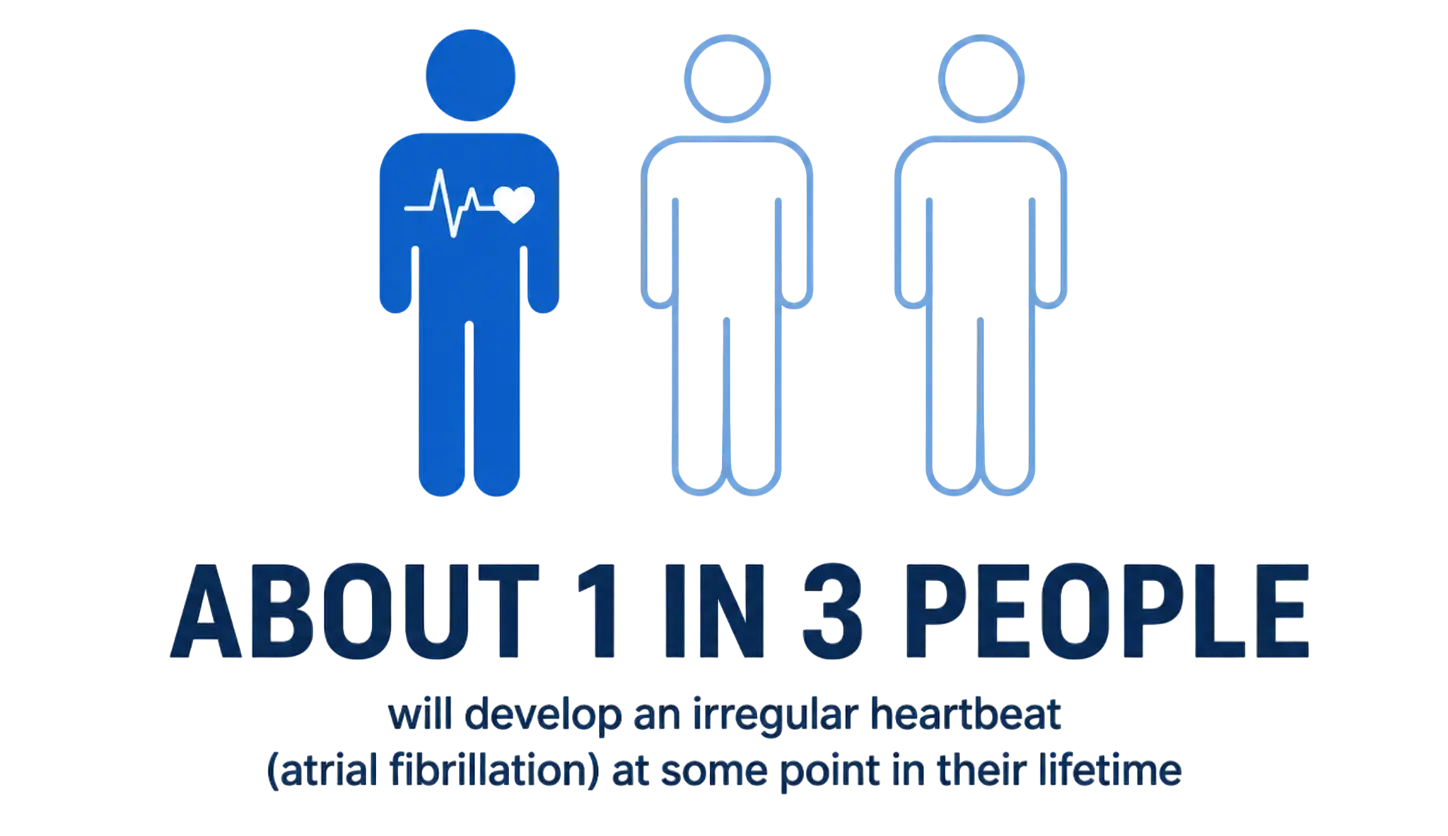
Atrial fibrillation — often called “AFib” or “AF” — is the most common type of irregular heartbeat (arrhythmia) in adults. Up to 1 in 3 people may develop it during their lifetime.

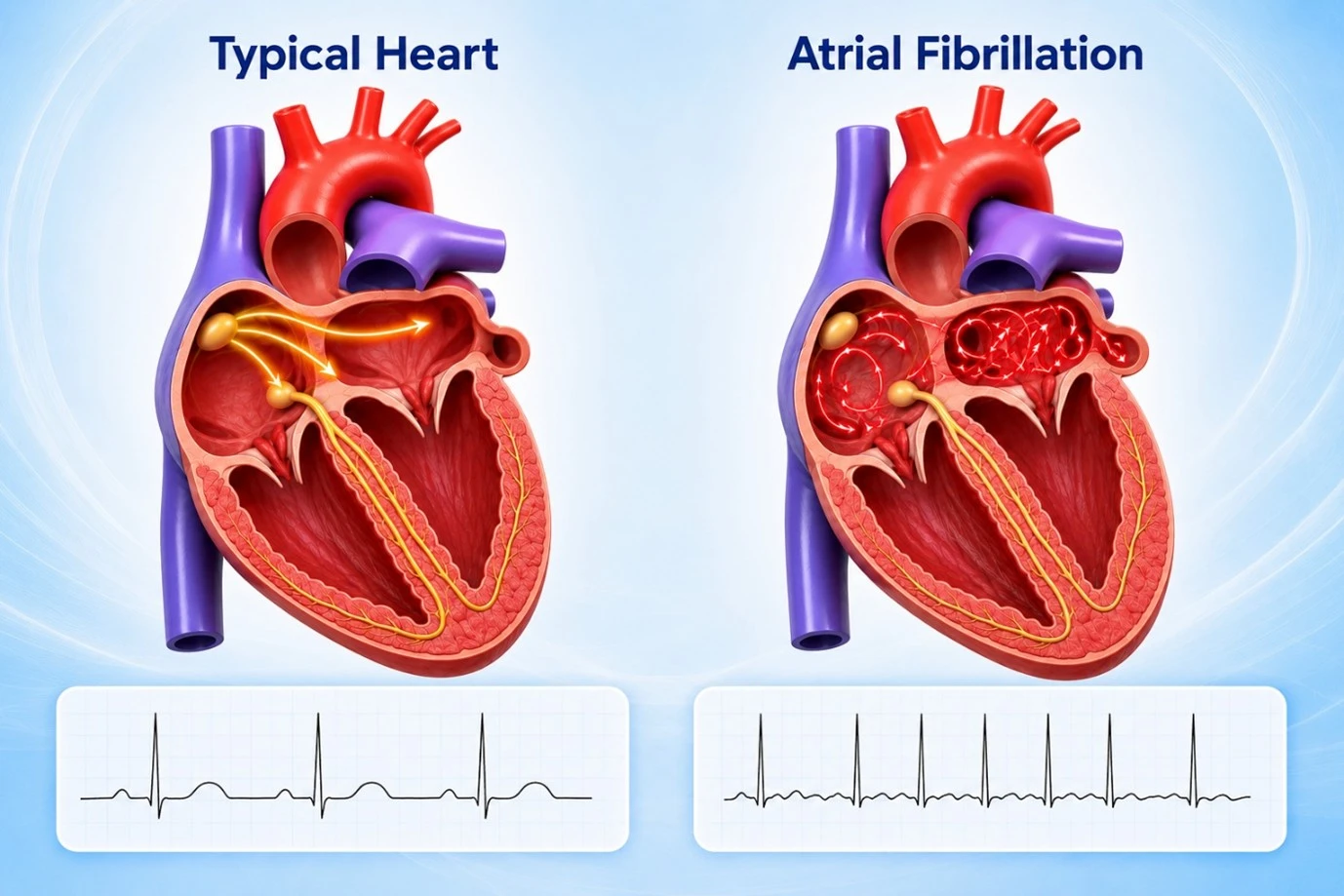
In a normal heart, the upper chambers (atria) beat in a steady, coordinated rhythm. In atrial fibrillation, the atria beat rapidly and irregularly — sometimes more than 300 times per minute — instead of pumping blood effectively. This can cause blood to pool in the heart, increasing the risk of blood clots, stroke, and other serious complications.

Side-by-side anatomical diagram comparing a typical heart with regular ECG to a heart with atrial fibrillation showing chaotic ECG
A typical heart maintains a steady rhythm originating from the sinus node. In atrial fibrillation, multiple electrical wavelets fire chaotically in the atria, producing the characteristic irregular pulse and fibrillating ECG baseline.

In Singapore, atrial fibrillation is a growing public health concern as the population ages. The prevalence rises sharply after age 65, and AFib is one of the leading causes of preventable stroke locally. The good news is that with proper assessment and treatment, the major risks of AFib — stroke and heart failure — can be greatly reduced.

Irregularly Irregular

What AFib Looks Like on an ECG

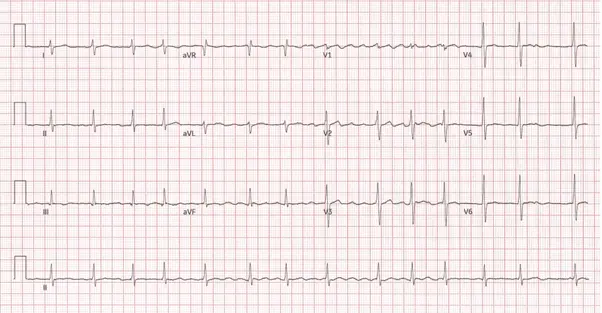
No visible P waves — a chaotic, wavering baseline replaces the normal flat line between beats, and QRS complexes fall at unpredictable intervals. This “irregularly irregular” pattern is the hallmark of AFib and can be confirmed with a simple 12-lead ECG in the clinic.

What It Feels Like

Symptoms of Atrial Fibrillation

Many people with AFib notice symptoms, but a significant number do not. About 10 to 40 percent of people with AFib are asymptomatic and may only discover the condition during a routine check, a smartwatch alert, or after a complication like a stroke.

Common symptoms include:

  • Palpitations — a fluttering, racing, or pounding feeling in the chest
  • Shortness of breath, especially during activity
  • Fatigue — feeling unusually tired or weak
  • Dizziness or lightheadedness
  • Chest discomfort or pain
  • Reduced ability to exercise

When to seek emergency care

Call 995 or go to the nearest A&E immediately if you experience chest pain, sudden severe shortness of breath, fainting, or signs of a stroke (sudden weakness on one side of the body, trouble speaking, facial drooping, or vision changes). Remember F.A.S.T.: Face drooping, Arm weakness, Speech difficulty, Time to call 995.

Note: AFib symptoms overlap with many other heart and non-heart conditions. A diagnosis can only be confirmed with an ECG — if you are unsure, please book a specialist consultation.

Interactive

How Fast Is Atrial Fibrillation?

A normal resting heart rate is 60–100 beats per minute (BPM). In AFib the atria fire chaotically at over 300 times per minute, and the lower chambers (ventricles) often respond with a fast, irregular pulse — commonly 100–160 BPM at rest. Drag the slider to feel the difference between a normal pulse and a fast, AFib-like rate.

70 bpm
Normal

Normal resting heart rate. Most healthy adults sit in this range at rest — this is what a healthy conduction system produces when everything is working correctly.

Dr Paul Lim

Suspect AFib? Get a 12-lead ECG and proper specialist evaluation.

Why It Happens

What Causes Atrial Fibrillation?

AFib develops when the electrical signals in the heart's upper chambers become disorganised. This is often the end result of slow changes in the heart's structure or electrical system over time. Most patients have more than one contributing factor.

Heart-related causes

  • High blood pressure — the single most common risk factor for AFib
  • Coronary artery disease — reduced blood flow to the heart muscle
  • Heart valve problems — especially mitral valve disease
  • Heart failure — AFib and heart failure often coexist and worsen each other
  • Previous heart surgery
  • Age-related fibrosis — gradual scarring of the heart's electrical system with age, the major driver of AFib after 65

Systemic and medical causes

  • Obesity and being overweight
  • Obstructive sleep apnoea — a common but often missed cause of AFib
  • Diabetes
  • Thyroid problems — especially an overactive thyroid (hyperthyroidism)
  • Chronic lung disease
  • Recent surgery, pneumonia, or other acute illness

Lifestyle and trigger causes

  • Excessive alcohol use or binge drinking — the classic “holiday heart” trigger
  • Smoking
  • Family history of atrial fibrillation
  • Severe physical or emotional stress
  • Dehydration — a common trigger in Singapore's climate

Age is also a major factor — AFib becomes more common as people get older, particularly after age 65. In some patients no single cause is obvious, but in most a combination of high blood pressure, structural heart disease, sleep apnoea, and lifestyle factors can be identified and treated.

Classification

Types of Atrial Fibrillation

AFib is classified based on how long episodes last and how they respond to treatment. The type matters because it influences your treatment plan and what to expect long-term.

Paroxysmal AFib

Episodes come and go on their own, usually lasting less than 7 days and often less than 48 hours. Many patients have only a few short episodes a year; others have multiple episodes a week. Paroxysmal AFib is often the most amenable to catheter ablation, with reasonable long-term success.

Persistent AFib

Episodes last longer than 7 days, or require treatment (medication or electrical cardioversion) to restore normal rhythm. Persistent AFib usually represents a more advanced stage in which the atria have begun to remodel.

Long-standing persistent AFib

Continuous AFib lasting more than 1 year. Restoring normal rhythm becomes progressively harder as the atria scar and enlarge, but a rhythm-control approach (including ablation) may still be worth attempting in selected patients.

Permanent AFib

Ongoing AFib where the patient and doctor have decided to stop trying to restore normal rhythm. The focus shifts entirely to rate control and stroke prevention. Patients can still live well with permanent AFib provided anticoagulation is appropriate and the heart rate is controlled.

Getting a Diagnosis

How Atrial Fibrillation Is Diagnosed

AFib is diagnosed with an electrocardiogram (ECG) — a simple, painless test that records the heart's electrical activity for about 10 seconds. Because AFib often comes and goes, additional ambulatory monitoring may be required if the resting ECG is normal.

12-lead ECG of a patient with atrial fibrillation showing an irregular, fast ventricular response and the absence of distinct P waves
An ECG chart from a patient under Dr Paul Lim’s care, showing the irregular, fast heart beats of atrial fibrillation.
  1. 1

    Clinical history and examination

    Your cardiologist will ask about symptoms, triggers, family history and existing health conditions, and check your pulse and blood pressure. An irregular pulse is the most reliable bedside clue to AFib.

  2. 2

    12-lead ECG

    The definitive first test. AFib has a characteristic appearance — no clear P waves and irregularly irregular QRS complexes. If the ECG captures AFib, the diagnosis is confirmed.

  3. 3

    Ambulatory ECG monitoring

    If AFib is suspected but the resting ECG is normal, a wearable monitor catches intermittent episodes:

    • Holter monitor — a portable ECG worn for 24 hours to 7 days
    • Event recorder — activated when you feel symptoms, useful for less frequent episodes
    • Implantable loop recorder — a small device placed under the skin to monitor heart rhythm for up to several years; reserved for unexplained stroke or rare but significant episodes
    • Smartwatches and wearables — can flag irregular rhythms, but a 12-lead ECG is required to confirm diagnosis
  4. 4

    Echocardiogram (heart ultrasound)

    A scan of the heart to check chamber size, valve function, and pumping strength. The size of the left atrium and the ejection fraction influence both treatment choice and prognosis.

  5. 5

    Blood tests

    Thyroid function, kidney function, full blood count, and sometimes a clotting profile. Thyroid problems and anaemia can trigger or worsen AFib and need to be excluded.

  6. 6

    Further investigations (selected cases)

    A treadmill stress test or CT scan of the coronary arteries may be ordered to rule out underlying coronary artery disease, especially in patients with chest discomfort or risk factors. A CT or MRI of the atria is sometimes performed before catheter ablation.

Why It Matters

Why Is Atrial Fibrillation Serious?

AFib itself is rarely immediately life-threatening, but its complications can be very serious. Understanding the risks is the first step to addressing them.

  • Stroke — AFib increases stroke risk by up to 5 times. When the atria do not contract effectively, blood pools in a small pouch called the left atrial appendage and can form clots. If a clot travels to the brain, it causes a stroke. AFib-related strokes tend to be larger and more disabling than other types.
  • Heart failure — persistently fast or irregular rates can weaken the heart muscle over time, a process called tachycardia-induced cardiomyopathy. Good rate or rhythm control usually reverses this.
  • Dementia — AFib is associated with an increased risk of cognitive decline, possibly through small silent strokes or reduced blood flow to the brain.
  • Reduced quality of life — fatigue, breathlessness, exercise intolerance, and anxiety are common, especially in symptomatic AFib.

The good news is that with proper treatment — particularly anticoagulation in patients at meaningful stroke risk — these risks can be greatly reduced.

Modern Care

How Atrial Fibrillation Is Treated

Modern AFib care focuses on three goals. Your cardiologist will discuss which combination suits you based on your age, symptoms, stroke risk, and the type and duration of AFib.

1. Reducing stroke risk (anticoagulation)

For most people with AFib, the single most important treatment is preventing stroke. Stroke risk is assessed using the CHA2DS2-VASc score, which considers age, sex, and conditions such as heart failure, hypertension, diabetes, prior stroke and vascular disease.

  • Direct oral anticoagulants (DOACs) — apixaban, rivaroxaban, dabigatran, edoxaban. First-line for most patients with non-valvular AFib. No regular INR blood tests required, and a lower risk of intracranial bleeding compared with warfarin.
  • Warfarin — still used in patients with mechanical heart valves or moderate-to-severe mitral stenosis.
  • Aspirinnot recommended for stroke prevention in AFib by current guidelines.
  • Left atrial appendage occlusion (LAAO) — a device-based option for patients who cannot tolerate long-term anticoagulation.

2. Controlling symptoms — rate or rhythm control

Rate control slows a fast AFib heart rate to a comfortable level using:

  • Beta-blockers (such as bisoprolol or metoprolol)
  • Non-dihydropyridine calcium-channel blockers (diltiazem, verapamil) — avoided in patients with reduced ejection fraction
  • Digoxin — usually added as a second-line option

Rhythm control aims to restore and maintain normal sinus rhythm. Increasingly, early rhythm control is favoured for many patients because of evidence that it improves outcomes when started within the first year of diagnosis.

  • Electrical cardioversion — a brief, controlled electrical shock under sedation that resets the rhythm
  • Antiarrhythmic medication — flecainide, propafenone, sotalol, dronedarone, amiodarone — chosen based on your underlying heart disease
  • Catheter ablation — a minimally invasive procedure that uses radiofrequency or cryothermal energy to isolate the pulmonary veins, where most AFib triggers originate. Increasingly offered as a first-line therapy for paroxysmal AFib in suitable patients.

3. Treating the underlying causes

Strong evidence now shows that addressing risk factors slows AFib progression and improves treatment outcomes:

  • Weight loss of 10 percent or more substantially reduces AFib burden in overweight patients
  • Treating obstructive sleep apnoea (CPAP where indicated)
  • Blood pressure control to below 130/80 mmHg
  • Limiting alcohol to less than one standard drink per day, or abstaining
  • Optimising diabetes and thyroid management
  • Regular moderate-intensity exercise
Day-to-Day

Living With and Preventing Atrial Fibrillation

Most people with AFib live full, active lives once the condition is well managed. Here is how to keep things on track, and what helps reduce risk in the first place.

Living well with AFib

  • Take anticoagulation exactly as prescribed. Missing doses, even for a day, raises stroke risk.
  • Know your triggers. Common ones include alcohol, dehydration, poor sleep, large meals, caffeine (in some individuals), and stress.
  • Stay active. Moderate-intensity aerobic exercise (brisk walking, swimming, cycling) is encouraged and may reduce AFib burden. Very high-intensity endurance exercise can sometimes worsen AFib in susceptible individuals.
  • Monitor at home. A blood-pressure cuff with an AFib indicator, or a smartwatch with ECG capability, can help track episodes — but should not replace formal medical assessment.
  • Tell your dentist, surgeon, or any new doctor that you are on anticoagulation before any procedure.
  • Attend regular follow-up with your cardiologist to reassess stroke risk, bleeding risk and rhythm status.

Can AFib be prevented?

Age and genetics cannot be changed, but the following measures meaningfully reduce risk:

  • Maintain a healthy weight (BMI below 25 kg/m2)
  • Treat high blood pressure
  • Limit alcohol
  • Do not smoke
  • Get screened and treated for obstructive sleep apnoea
  • Manage diabetes
  • Stay physically active with moderate-intensity exercise

For people with known risk factors, opportunistic screening with a pulse check or single-lead ECG is reasonable from age 65 onwards. Many cases of AFib are picked up incidentally on a routine ECG or smartwatch.

Common Questions

Atrial Fibrillation FAQ

Answers to the most common questions about atrial fibrillation, its risks, and how it is treated.

What is atrial fibrillation?

Atrial fibrillation — often called AFib or AF — is the most common type of irregular heartbeat in adults. The upper chambers of the heart (atria) beat rapidly and irregularly, sometimes more than 300 times per minute, instead of pumping blood effectively. This can cause symptoms such as palpitations and fatigue, and raises the risk of blood clots and stroke.

Is atrial fibrillation dangerous?

AFib itself is rarely immediately life-threatening, but its complications can be serious. The biggest risk is stroke — AFib raises stroke risk by up to 5 times. Other risks include heart failure, dementia, and reduced quality of life. With modern treatment, particularly anticoagulation, most of these risks can be substantially reduced.

What causes atrial fibrillation?

High blood pressure is the single most common risk factor. Other major contributors are age, coronary artery disease, heart valve disease, heart failure, obesity, obstructive sleep apnoea, diabetes, an overactive thyroid, excessive alcohol, and a family history of AFib. Many patients have more than one contributing factor.

What are the symptoms of atrial fibrillation?

Common symptoms include palpitations (a fluttering, racing or pounding sensation), shortness of breath, fatigue, dizziness, chest discomfort and reduced exercise tolerance. About 10 to 40 percent of people with AFib have no symptoms at all and may only discover the condition during a routine check, a smartwatch alert, or after a stroke.

How is atrial fibrillation diagnosed?

AFib is diagnosed with an electrocardiogram (ECG). Because AFib can come and go, a Holter monitor (24 hours to 7 days), an event recorder or an implantable loop recorder may be needed to catch intermittent episodes. An echocardiogram is usually performed to check the heart's structure, along with blood tests for thyroid and kidney function.

How does atrial fibrillation cause stroke?

In AFib the atria do not contract effectively, so blood can pool in a small pouch called the left atrial appendage. Stagnant blood can form clots. If a clot dislodges, it can travel through the bloodstream to the brain and block an artery — causing a stroke. This is why anticoagulation, based on the CHA2DS2-VASc score, is central to AFib management.

What is the difference between paroxysmal, persistent, and permanent AFib?

Paroxysmal AFib comes and goes on its own within 7 days. Persistent AFib lasts more than 7 days or needs treatment to stop. Long-standing persistent AFib lasts more than a year. Permanent AFib is ongoing AFib where the decision has been made to stop trying to restore normal rhythm and focus instead on rate control and stroke prevention.

How is atrial fibrillation treated?

Modern AFib care focuses on three goals: reducing stroke risk with anticoagulation, controlling symptoms with rate or rhythm-control therapy, and addressing risk factors such as blood pressure, weight, sleep apnoea and alcohol. Treatment options include direct oral anticoagulants (DOACs), beta-blockers, antiarrhythmic medication, electrical cardioversion and catheter ablation.

Can atrial fibrillation be cured?

For many patients with paroxysmal AFib, catheter ablation can effectively eliminate AFib episodes — though AFib can recur, especially if underlying risk factors are not addressed. For persistent or long-standing AFib the goal is usually control rather than cure. Even so, modern catheter ablation has substantially improved long-term outcomes.

Is aspirin enough to prevent stroke in atrial fibrillation?

No. Current cardiology guidelines do not recommend aspirin for stroke prevention in AFib because it is much less effective than anticoagulants while still carrying a bleeding risk. Patients at significant stroke risk should be on a direct oral anticoagulant (DOAC) or, in selected cases, warfarin.

What lifestyle changes help atrial fibrillation?

Strong evidence shows that addressing risk factors slows AFib progression. Weight loss of 10 percent or more in overweight patients substantially reduces AFib burden. Treating obstructive sleep apnoea, controlling blood pressure to below 130/80 mmHg, limiting alcohol, and regular moderate-intensity exercise all help. These measures work alongside, not instead of, medical therapy.

How long can you live with atrial fibrillation?

With proper treatment — particularly stroke prevention with anticoagulation, rate or rhythm control, and management of underlying risk factors — many people with AFib live a normal lifespan. Untreated AFib raises the risk of premature death from stroke and heart failure, which is why early specialist evaluation matters.

Concerned About Atrial Fibrillation?

Schedule a consultation with Dr Paul Lim for a 12-lead ECG, stroke-risk assessment, and a personalised AFib management plan.

WhatsApp Call Now