 Medically Reviewed By: Dr Paul Lim – MBBS, M.Med (Int Med), MRCP (UK), FAMS (Cardiology)
ECG Test Electrocardiogram in Singapore
An ECG (electrocardiogram) is a quick, painless test that records your heart's electrical activity. In a few seconds it shows your heart rate and rhythm. It can also reveal an irregular heartbeat, a strained heart muscle or a previous heart attack, which is why it is usually the first test in a cardiac assessment. Wondering what yours will show? Dr Paul Lim is happy to walk you through the tracing at your own pace.
Reviewed by Dr Paul Lim Chun Yih
Senior Consultant Cardiologist

Clinical Experience
Your ECG Is Reviewed by Dr Paul Lim
Senior Consultant Cardiologist & Cardiac Electrophysiologist
Dr Paul Lim is a Senior Consultant Cardiologist who reviews and reports your ECG as part of a full cardiac assessment, and explains the findings to you directly. He completed advanced fellowship training at Barts Heart Centre, London under Singapore’s HMDP award.
- MBBS (Singapore)
- M.Med (Int Med)
- MRCP (UK)
- FAMS (Cardiology)
- Fellow, European Society of Cardiology (FESC)
- Fellow, American College of Cardiology (FACC)
- Fellow, Heart Rhythm Society (FHRS)
What Is an ECG?
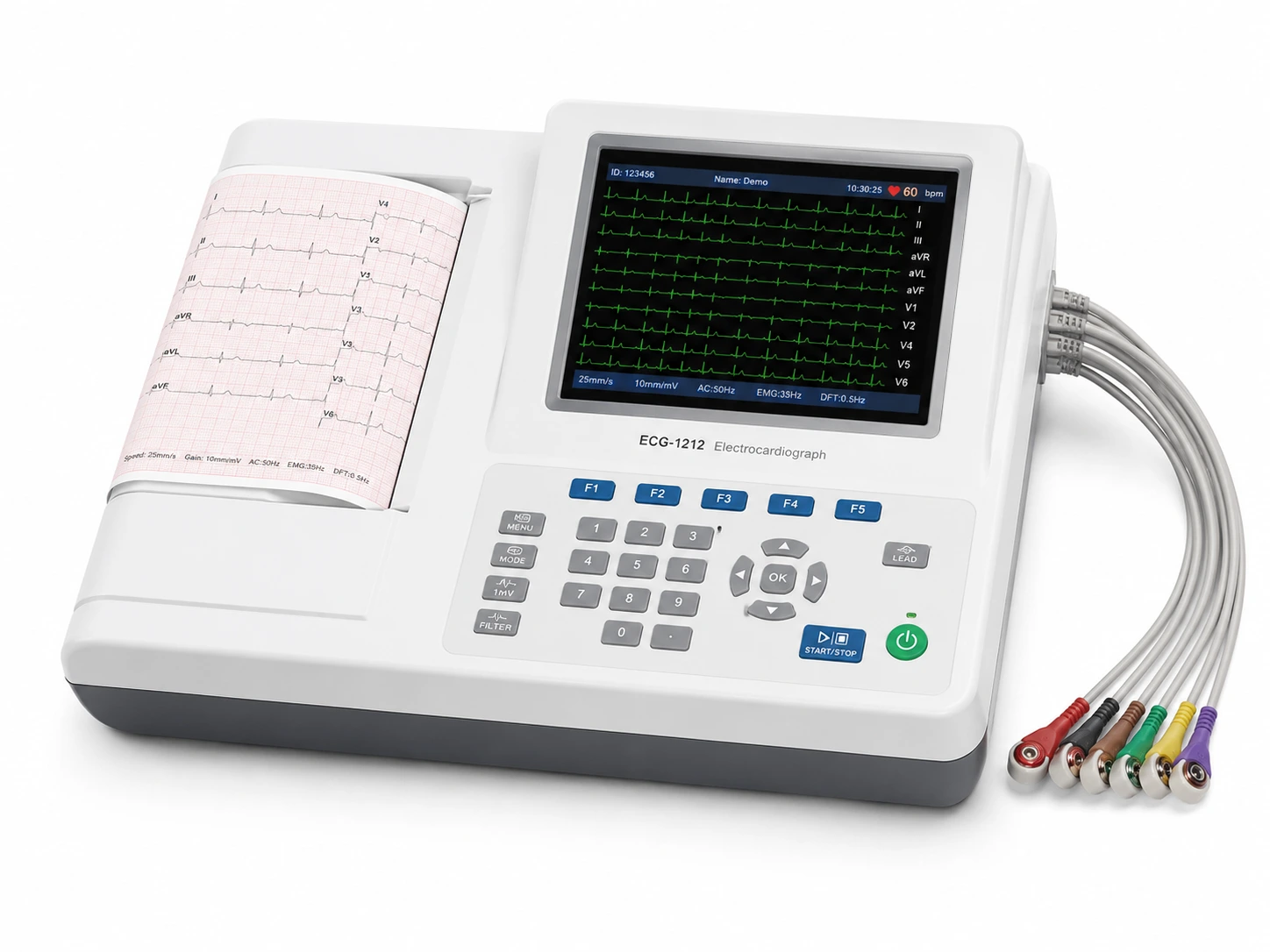
An electrocardiogram (ECG) — sometimes written EKG — is a simple test that records the tiny electrical signals your heart produces with every beat. Small sticky electrodes are placed on the chest, arms and legs and connected to an ECG machine, which traces those signals as a line on graph paper or a screen.
A standard resting ECG uses twelve viewpoints (a “12-lead” ECG) to look at the heart from different angles. It captures only about ten seconds of activity, but in that short window it can show whether your heart rate and rhythm are normal and flag a wide range of heart problems for a heart specialist to review.
What an ECG Can Show
From a few seconds of recording, an ECG helps a cardiologist assess:
- Your heart rate and whether the rhythm is too fast, too slow or irregular
- Any abnormal electrical activity of the heart, such as atrial fibrillation and atrial flutter present at the time of the recording
- Signs of a previous or ongoing heart attack and reduced blood supply to the heart muscle
- Enlargement or thickening of the heart chambers
- Conduction problems or heart block that can cause dizziness or blackouts — that may indicate the need for a pacemaker
- Effects of some medicines or electrolyte imbalances on the heart
If your report came back marked abnormal or borderline, see what an abnormal ECG means — the wording is generated by the machine, and most flagged tracings turn out to be normal variants.
An ECG is commonly done to investigate palpitations, chest pain, breathlessness, dizziness or fainting, as part of a heart screening, and before certain treatments. Because a resting ECG only captures about ten seconds, an intermittent rhythm problem can be missed — if symptoms continue despite a normal ECG, a 24-hour Holter monitor or a longer-term implantable loop recorder may be recommended. Where symptoms come on with exertion, a treadmill stress test — an ECG recorded during exercise — may be the next step. Learn more about irregular heartbeats.
What to Expect
Having an ECG is quick, comfortable and needs no preparation.
- You lie down and uncover your chest, ankles and wrists. A female professional cleans a few spots on the skin.
- Ten small sticky electrodes are placed on the chest, arms and legs and clipped to the ECG machine. Men with a hairy chest may have small areas shaved for good contact.
- You lie still and breathe normally for a few seconds while the machine records. The recording itself is over in moments.
- It is completely painless — the machine only listens to your heart's own signals. No electricity goes into your body and there is no radiation.
- The electrodes are peeled off and you can return to your normal activities straight away.
- Dr Paul Lim reviews and reports the ECG and explains the findings to you during your consultation.
Why Do Your ECG with Us?
Female Professionals
The ECG is performed by female healthcare professionals.
Reviewed by a Cardiologist
Your ECG is interpreted and reported by Dr Paul Lim, a Senior Consultant Cardiologist.
Quick & Painless
The recording takes only a few seconds, with no needles, no radiation and no downtime.
Friendly & Caring Service
Our team takes the time to put you at ease and explain your results clearly, so you leave understanding what they mean.
Transparent Pricing
Our ECG and consultation fees are published below, so you know the cost before you book.
Two Locations
Available at our Jurong and Orchard clinics.
Think you may need an ECG? Speak with Dr Paul Lim.
ECG Cost in Singapore
All fees are inclusive of GST.
| Service | Price |
|---|---|
| Test | |
| Electrocardiogram (ECG) | From S$49.05 |
| Consultation | |
| First Consultation with Cardiologist (Jurong) | S$130.80 |
| Follow-up Consultation with Cardiologist (Jurong) | S$98.10 |
| First Consultation with Cardiologist (Orchard) | S$218 |
| Follow-up Consultation with Cardiologist (Orchard) | S$163.50 |
A consultation with the cardiologist is required so the test can be properly indicated and the results explained. If you already have a referral letter from another doctor, the ECG can be arranged without a separate consultation. An ECG is also included as standard in our heart screening packages.
Book an ECG Appointment
Arrange an ECG at either clinic. A cardiologist consultation is required, or the test can proceed with a referral letter from another doctor.
Send Us a Message

Where to Get an ECG Test in Singapore

Opening Hours
| Monday – Friday | 8:30 AM – 5:30 PM |
| Saturday | 8:30 AM – 12:30 PM |
| Sunday & Public Holidays | Closed |
By Appointment Only
ECG FAQ
What is an ECG?
An ECG (electrocardiogram, sometimes written EKG) is a quick, painless test that records the electrical activity of your heart. Small sticky electrodes are placed on the chest, arms and legs, and a machine traces each heartbeat onto graph paper or a screen, so a cardiologist can check your heart rate, rhythm and electrical conduction.
Does an ECG hurt, and is it safe?
No. An ECG is completely painless and carries no risk. It only listens to your heart's own electrical signals through the skin — no electricity is put into your body, and there is no radiation. The electrodes are simply peeled off afterwards.
How long does an ECG take?
The recording itself takes only a few seconds once the electrodes are attached. Allow about 5 to 10 minutes in total for the electrodes to be placed and removed. You can usually go straight back to your normal activities afterwards.
How do I prepare for an ECG?
No special preparation is needed. It helps to arrive with clean, dry skin and to avoid body lotion, oil or powder on the chest so the electrodes stick well. Men with a very hairy chest may have small areas shaved for good contact. You can eat and take your usual medicines as normal unless told otherwise.
What is the difference between an ECG and an echocardiogram?
They measure different things. An ECG records the heart's electrical activity, while a 2D echocardiogram is an ultrasound scan of the heart's structure and pumping function. See how the two tests compare, including what each one finds and misses.
What is the difference between an ECG and a Holter monitor?
A standard resting ECG captures only about ten seconds of your heart rhythm in the clinic. A Holter monitor is a portable ECG worn for 24 hours or longer, so it is far better at catching intermittent rhythm problems that may not appear during a brief recording. If your resting ECG is normal but symptoms continue, a Holter monitor may be the next step.
Will a woman perform the ECG?
Yes. The ECG is performed by female professionals.
How much does an ECG cost in Singapore?
At our clinic an ECG is from S$49.05, inclusive of GST. A cardiologist consultation is also required (S$130.80 first / S$98.10 follow-up at Jurong; S$218 first / S$163.50 follow-up at Orchard, inclusive of GST). See the fee table above.
Who interprets my ECG?
Your ECG is reviewed and reported by Dr Paul Lim, a Senior Consultant Cardiologist, and the findings are explained to you during your consultation.