 Medically Reviewed By: Dr Paul Lim – MBBS, M.Med (Int Med), MRCP (UK), FAMS (Cardiology)
Lipoprotein (a) Test Lp(a) Blood Test in Singapore
Lipoprotein (a), or Lp(a), is an inherited type of cholesterol particle. It raises your risk of heart attack, stroke and aortic valve disease. A standard cholesterol panel does not measure it, so one simple blood test, done once in your life, can reveal a risk that runs quietly in families. Heart disease in your family? Bring your questions to Dr Paul Lim, who is unhurried and easy to talk to, and will explain what your level means for you and your relatives.
Reviewed by Dr Paul Lim Chun Yih
Senior Consultant Cardiologist

Clinical Experience
Your Lp(a) Result Is Interpreted by Dr Paul Lim
Senior Consultant Cardiologist & Cardiac Electrophysiologist
Dr Paul Lim is a Senior Consultant Cardiologist who reviews your lipoprotein(a) result in the context of your full cardiovascular risk — your other cholesterol numbers, blood pressure, family history and lifestyle — and explains what it means for you and what, if anything, to do about it. He completed advanced fellowship training at Barts Heart Centre, London under Singapore’s HMDP award.
- MBBS (Singapore)
- M.Med (Int Med)
- MRCP (UK)
- FAMS (Cardiology)
- Fellow, European Society of Cardiology (FESC)
- Fellow, American College of Cardiology (FACC)
- Fellow, Heart Rhythm Society (FHRS)
What Is Lipoprotein (a)?
Lipoprotein (a), usually written Lp(a) and said “L-P-little-a”, is a cholesterol-carrying particle in your blood. It is similar to LDL — the so-called “bad” cholesterol — but carries an extra sticky protein that makes it more likely to lodge in artery walls and encourage clots.
Your Lp(a) level is set almost entirely by the genes you inherit. It is largely fixed from an early age, changes little with diet, exercise or weight, and is not lowered by most cholesterol medicines. That is why a single measurement usually tells you your lifelong level — and why a high result is important information for you and your close relatives.
Why a High Lp(a) Is Important
A raised Lp(a) is an independent, inherited risk factor for cardiovascular disease. Testing helps a cardiologist assess:
- Your risk of an early heart attack and of coronary artery disease
- Your risk of stroke from furring-up of the arteries
- Your risk of narrowing of the aortic valve (aortic stenosis) over time
- A hidden risk that a standard cholesterol panel cannot show — you can have normal LDL, HDL and triglycerides and still carry a raised Lp(a)
- Whether your other risk factors — LDL cholesterol, blood pressure, diabetes — should be treated more intensively to compensate
Because Lp(a) is inherited, a high result is also a prompt to consider checking first-degree relatives (parents, brothers, sisters and children). It is one piece of your overall risk picture, which is why it is best interpreted by a cardiologist alongside your other results — for example a CT calcium score or a full heart screening.
Who Should Have a Lipoprotein (a) Test?
Current major cardiovascular guidelines recommend measuring lipoprotein(a) or Lp(a) at least once in every adult’s lifetime to assess genetic heart disease risk. Especially if you have:
- A personal history of heart attack, stroke or heart disease, particularly at a younger age
- A family history of early heart disease or stroke (for example a parent or sibling affected before about 55 in men or 65 in women)
- A strong family history of raised blood cholesterol or known familial hypercholesterolaemia
- Very high cholesterol yourself
- Heart disease that has progressed despite well-controlled LDL cholesterol
- A wish to understand your inherited cardiovascular risk as part of a thorough health check
Not sure whether the test is right for you? Dr Paul Lim can advise during a consultation and arrange it where appropriate.
What to Expect
The test itself is quick and straightforward.
- No fasting is needed — you can eat and drink normally and take your usual medicines before the test.
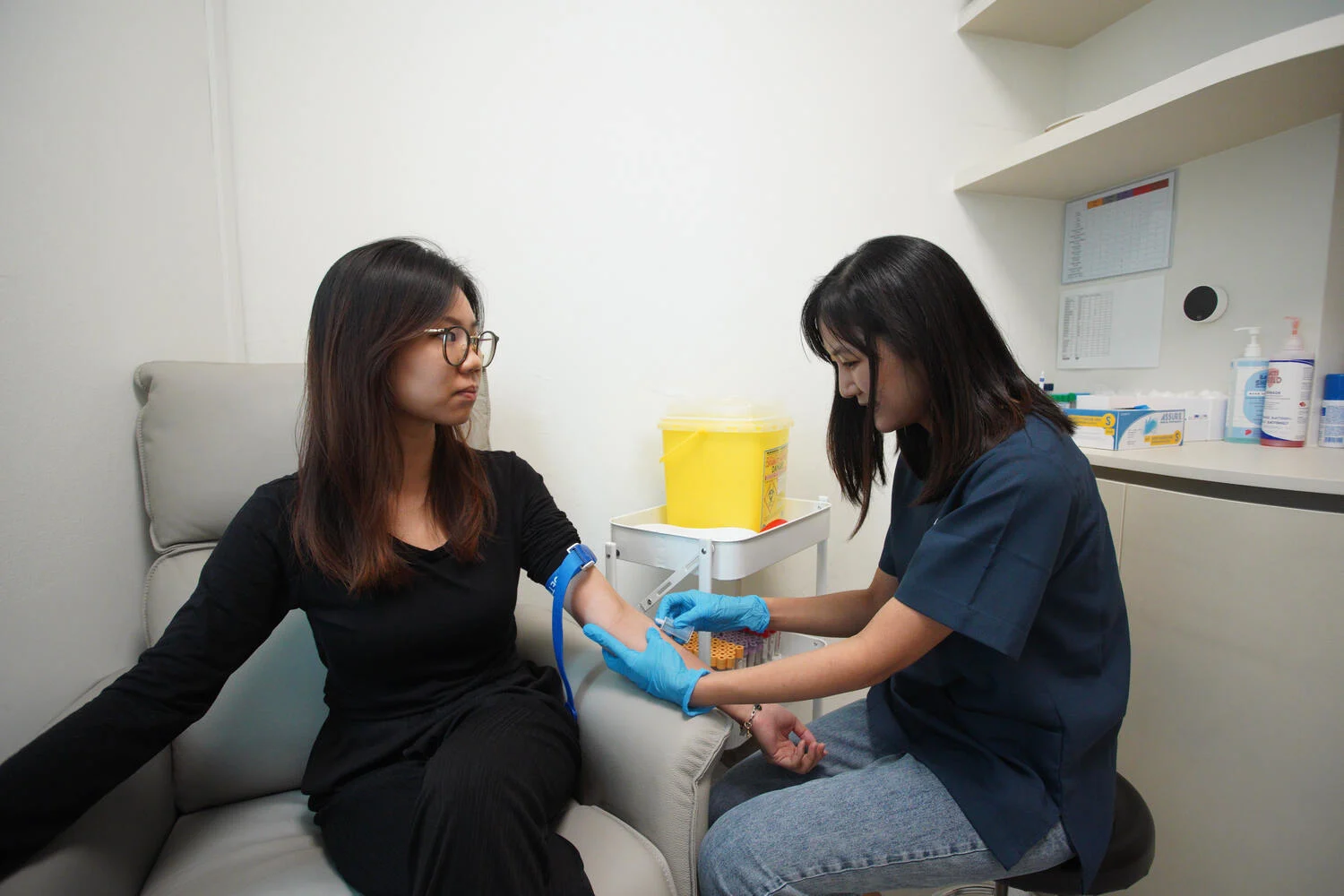
- A phlebotomist takes a single blood sample from a vein in your arm. It takes only a few minutes.
- The sample is sent to the laboratory and your Lp(a) level is measured.
- Dr Paul Lim reviews the result alongside your other cholesterol numbers, blood pressure, family history and lifestyle, and explains what it means for you.
- If your Lp(a) is high, he will discuss how to lower your overall risk and whether your close relatives should also be checked.
Why Do Your Lp(a) Test with Us?
Insight for Your Family
Because Lp(a) is inherited, a high result is useful information for your close relatives, who may wish to be checked too.
Interpreted by a Cardiologist
Your result is reviewed by Dr Paul Lim and explained in the context of your overall heart risk — not just handed to you as a number.
No Fasting, One Sample
A single blood draw with no fasting and no special preparation.
Usually a One-Time Test
Because Lp(a) is inherited and stays stable for life, a single measurement usually tells you your lifelong level.
Transparent Pricing
Our Lp(a) and consultation fees are published below, so you know the cost before you book.
Two Locations
Available at our Jurong and Orchard clinics.
Wondering if you should check your Lp(a)? Speak with Dr Paul Lim.
Lipoprotein (a) Test Cost in Singapore
All fees are inclusive of GST.
| Service | Price |
|---|---|
| Test | |
| Lipoprotein (a) — Lp(a) | S$49.99 |
| Basic Heart Check-Up Package An all-inclusive screening — includes a first-time Lp(a), a cardiologist consultation & review, a comprehensive blood panel, a resting ECG and a treadmill stress test | S$368 |
| Consultation | |
| First Consultation with Cardiologist (Jurong) | S$130.80 |
| Follow-up Consultation with Cardiologist (Jurong) | S$98.10 |
| First Consultation with Cardiologist (Orchard) | S$218 |
| Follow-up Consultation with Cardiologist (Orchard) | S$163.50 |
A consultation with the cardiologist is required so the test can be properly indicated and your result interpreted in the context of your overall cardiovascular risk.
A first-time Lipoprotein (a) test is included in our heart screening packages. Because your Lp(a) level is inherited and stays stable through life, a single measurement is usually enough — so it only needs to be tested once.
Book a Lipoprotein (a) Test
For most people Lp(a) needs measuring only once — arrange yours at either clinic.
Send Us a Message

Where to Get an Lp(a) Test in Singapore

Opening Hours
| Monday – Friday | 8:30 AM – 5:30 PM |
| Saturday | 8:30 AM – 12:30 PM |
| Sunday & Public Holidays | Closed |
By Appointment Only
Lipoprotein (a) FAQ
What is lipoprotein(a)?
Lipoprotein(a), written Lp(a), is a cholesterol-carrying particle in your blood, similar to LDL (“bad” cholesterol) but with an extra protein attached. Your Lp(a) level is set largely by your genes and stays fairly constant throughout life. A high level raises the risk of heart attack, stroke and narrowing of the aortic valve, independently of your other cholesterol numbers.
Why does a high lipoprotein(a) level matter?
A raised Lp(a) is an independent, inherited risk factor for atherosclerotic cardiovascular disease. It can speed up the furring-up of the arteries and is linked with earlier heart attacks, strokes and aortic valve disease. Because it acts on top of your LDL cholesterol, you can have a normal standard cholesterol result and still carry an increased risk from Lp(a).
Who should have a lipoprotein(a) test?
Current major cardiovascular guidelines recommend measuring lipoprotein(a) or Lp(a) at least once in every adult’s lifetime to assess genetic heart disease risk. It is particularly worth testing if you have a personal or family history of early heart disease or stroke, a strong family history of high cholesterol, very high cholesterol, or heart disease that has progressed despite well-controlled LDL cholesterol. Dr Paul Lim can advise whether the test is appropriate for you.
Does a standard cholesterol test already measure Lp(a)?
No. A standard lipid panel measures total, LDL and HDL cholesterol and triglycerides, but it does not include lipoprotein(a). Lp(a) has to be requested as a separate test.
Do I need to fast, and how is the test done?
No fasting is needed for a lipoprotein(a) test. It is a single blood sample taken from a vein in your arm by a phlebotomist, and takes only a few minutes.
How often should lipoprotein(a) be checked?
For most people, once is enough. Because Lp(a) is largely genetically determined and stays stable through life, a single measurement usually tells you your lifelong level. Repeat testing is generally only considered in specific circumstances advised by your cardiologist.
Can a high lipoprotein(a) level be lowered?
There is currently no medication — tablet or injection — licensed specifically to lower lipoprotein(a), although several are in clinical trials. Lipoprotein apheresis, a procedure that filters Lp(a) out of the blood, is an approved treatment for severe cases (for example a very high Lp(a) together with familial hypercholesterolaemia and established artery disease), but it is invasive and not widely available. So for most people the focus is on reducing your overall cardiovascular risk — for example by tightly controlling LDL cholesterol and blood pressure, not smoking, and managing diabetes. Dr Paul Lim will explain what your result means for you and the steps that can help.
How much does a lipoprotein(a) test cost in Singapore?
At our clinic a lipoprotein(a) test is S$49.99, inclusive of GST. A cardiologist consultation is also required (S$130.80 first / S$98.10 follow-up at Jurong; S$218 first / S$163.50 follow-up at Orchard, inclusive of GST). A first-time Lp(a) test is also included in our heart screening packages. See the fee table above.