 Medically Reviewed By: Dr Paul Lim – MBBS, M.Med (Int Med), MRCP (UK), FAMS (Cardiology)
hs-CRP Test High-Sensitivity CRP Blood Test in Singapore
hs-CRP, or high-sensitivity C-reactive protein, is a blood test that measures low-grade inflammation in the body. Inflammation plays a part in the furring-up of the arteries. A raised level is associated with a higher risk of heart attack and stroke that a standard cholesterol panel can miss. Not sure where yours fits? Sit down with Dr Paul Lim, who will read it alongside the rest of your risk and take as long over it as you need.
Reviewed by Dr Paul Lim Chun Yih
Senior Consultant Cardiologist

Clinical Experience
Your hs-CRP Result Is Interpreted by Dr Paul Lim
Senior Consultant Cardiologist & Cardiac Electrophysiologist
Dr Paul Lim is a Senior Consultant Cardiologist who reviews your hs-CRP result in the context of your full cardiovascular risk — your cholesterol numbers, blood pressure, family history and lifestyle — and explains what it means for you and what, if anything, to do about it. He completed advanced fellowship training at Barts Heart Centre, London under Singapore’s HMDP award.
- MBBS (Singapore)
- M.Med (Int Med)
- MRCP (UK)
- FAMS (Cardiology)
- Fellow, European Society of Cardiology (FESC)
- Fellow, American College of Cardiology (FACC)
- Fellow, Heart Rhythm Society (FHRS)
What Is hs-CRP?
hs-CRP stands for high-sensitivity C-reactive protein. C-reactive protein is made by the liver and rises when there is inflammation anywhere in the body. The high-sensitivity version of the test can detect the low levels of inflammation linked to furring-up of the arteries — levels that a standard CRP test is not designed to pick up.
Inflammation is now understood to play a part in the build-up and instability of plaque in the arteries. So a raised hs-CRP can point to a cardiovascular risk that sits alongside, and can be missed by, your cholesterol numbers. Because CRP also rises with infections and other illnesses, it is best measured when you are well, and interpreted by a cardiologist as one part of your overall risk picture.
Why a High hs-CRP Is Important
A raised hs-CRP reflects low-grade inflammation linked to cardiovascular disease. Testing helps a cardiologist assess:
- Your risk of heart attack and coronary artery disease
- Your risk of stroke from furring-up of the arteries
- A risk that cholesterol alone may not reveal — inflammation acts on top of your other risk factors
- How intensively your other risk factors — LDL cholesterol, blood pressure, diabetes — should be treated, particularly when your risk is borderline or intermediate
- A marker you can re-check to see whether lifestyle changes or treatment are reducing inflammation
hs-CRP is not specific to the heart — it also rises with infection or illness — so it is one piece of your overall risk picture, best interpreted by a cardiologist alongside your other results, for example an apolipoprotein B test, a CT calcium score or a full heart screening.
Who Should Have an hs-CRP Test?
An hs-CRP test is especially worth considering if you have:
- An intermediate cardiovascular risk, where the best course of action is not clear-cut and hs-CRP can help guide it
- A personal or family history of early heart disease or stroke
- Metabolic syndrome or diabetes
- Raised cholesterol or other risk factors you want to understand more fully
- A wish to build a fuller picture of your cardiovascular risk as part of a thorough health check
Not sure whether the test is right for you? Dr Paul Lim can advise during a consultation and arrange it where appropriate — including the best timing, away from any infection.
What to Expect
The test itself is quick and straightforward.
- No fasting is needed — you can eat and drink normally and take your usual medicines before the test.
- For the most useful result, the test is best taken when you are well, away from any cold, infection or recent injury, which can temporarily raise CRP.
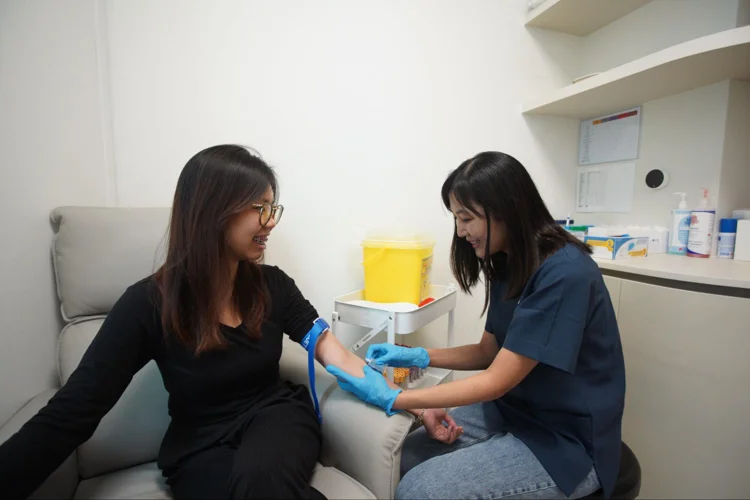
- A phlebotomist takes a single blood sample from a vein in your arm. It takes only a few minutes.
- Dr Paul Lim reviews the result alongside your cholesterol numbers, blood pressure, family history and lifestyle, and explains what it means for you.
- If your hs-CRP is raised, he may suggest repeating it when you are well to confirm a true low-grade level, and will discuss how to lower your overall risk.
Why Do Your hs-CRP Test with Us?
An Added Layer of Risk
hs-CRP measures inflammation that can add to your heart-disease risk — a layer a standard cholesterol panel cannot show.
Interpreted by a Cardiologist
Your result is reviewed by Dr Paul Lim and explained in the context of your overall heart risk — not just handed to you as a number.
No Fasting, One Sample
A single blood draw with no fasting and no special preparation.
Track Your Progress
Because inflammation can change, hs-CRP can be re-checked to see whether your changes or treatment are working.
Transparent Pricing
Our hs-CRP and consultation fees are published below, so you know the cost before you book.
Two Locations
Available at our Jurong and Orchard clinics.
Wondering if you should check your hs-CRP? Speak with Dr Paul Lim.
hs-CRP Test Cost in Singapore
All fees are inclusive of GST.
| Service | Price |
|---|---|
| Test | |
| High-Sensitivity CRP — hs-CRP | S$38.15 |
| Basic Heart Check-Up Package An all-inclusive screening — includes hs-CRP, a cardiologist consultation & review, a comprehensive blood panel, a resting ECG and a treadmill stress test | S$368 |
| Consultation | |
| First Consultation with Cardiologist (Jurong) | S$130.80 |
| Follow-up Consultation with Cardiologist (Jurong) | S$98.10 |
| First Consultation with Cardiologist (Orchard) | S$218 |
| Follow-up Consultation with Cardiologist (Orchard) | S$163.50 |
A consultation with the cardiologist is required so the test can be properly indicated and your result interpreted in the context of your overall cardiovascular risk.
hs-CRP is included in our heart screening packages. Because inflammation can rise temporarily with illness, a raised hs-CRP is often repeated when you are well to confirm a true low-grade level.
Book an hs-CRP Blood Test
Arrange an hs-CRP test, read alongside your lipid panel and other risk markers.
Send Us a Message

Where to Get an hs-CRP Test in Singapore

Opening Hours
| Monday – Friday | 8:30 AM – 5:30 PM |
| Saturday | 8:30 AM – 12:30 PM |
| Sunday & Public Holidays | Closed |
By Appointment Only
hs-CRP FAQ
What is hs-CRP?
hs-CRP stands for high-sensitivity C-reactive protein. C-reactive protein is made by the liver and rises when there is inflammation in the body. The high-sensitivity version can detect the low levels of inflammation linked to furring-up of the arteries (atherosclerosis), which a standard CRP test is not designed to pick up. A raised hs-CRP suggests low-grade inflammation that may add to your cardiovascular risk.
Why does a high hs-CRP matter for the heart?
Inflammation plays a part in the build-up and instability of plaque in the arteries. A raised hs-CRP is linked with a higher risk of heart attack and stroke, independently of your cholesterol. It can help a cardiologist refine your risk, particularly when your other risk factors put you in an intermediate category and the best course of action is not clear-cut.
Who should have an hs-CRP test?
hs-CRP is most useful for people at intermediate cardiovascular risk, where it can help decide how intensively to treat, and for those with a personal or family history of heart disease, metabolic syndrome or diabetes who want a fuller picture of their risk. Dr Paul Lim can advise whether the test is appropriate for you and interpret it alongside your other results.
Can other things raise hs-CRP?
Yes. hs-CRP is not specific to the heart — it rises with any infection, recent illness or injury, and other inflammatory conditions. For this reason it should be measured when you are well, away from any acute infection. A very high reading usually reflects an infection rather than cardiovascular risk, and the test is sometimes repeated to confirm a true low-grade level.
Do I need to fast, and how is the test done?
No fasting is needed for an hs-CRP test. It is a single blood sample taken from a vein in your arm by a phlebotomist, and takes only a few minutes.
How often should hs-CRP be checked?
Because hs-CRP can be affected by temporary inflammation, a raised result is often repeated when you are well to confirm a true low-grade level. After that, your cardiologist may re-check it to see whether lifestyle changes or treatment are reducing inflammation.
Can a high hs-CRP be lowered?
Often, yes. Many of the measures that reduce cardiovascular risk also lower inflammation — losing excess weight, regular physical activity, not smoking, and treating conditions such as high blood pressure and diabetes. Statins, where appropriate, also lower hs-CRP. Dr Paul Lim will explain what your result means and the steps that can help.
How much does an hs-CRP test cost in Singapore?
At our clinic a high-sensitivity CRP test is S$38.15, inclusive of GST. A cardiologist consultation is also required (S$130.80 first / S$98.10 follow-up at Jurong; S$218 first / S$163.50 follow-up at Orchard, inclusive of GST). hs-CRP is also included in our heart screening packages. See the fee table above.